How Much Do Custom Patches Cost? Sizes, Quantities & Fees
See PatchYours starting prices for custom patches and learn how size, quantity, material and design details affect your final quote.
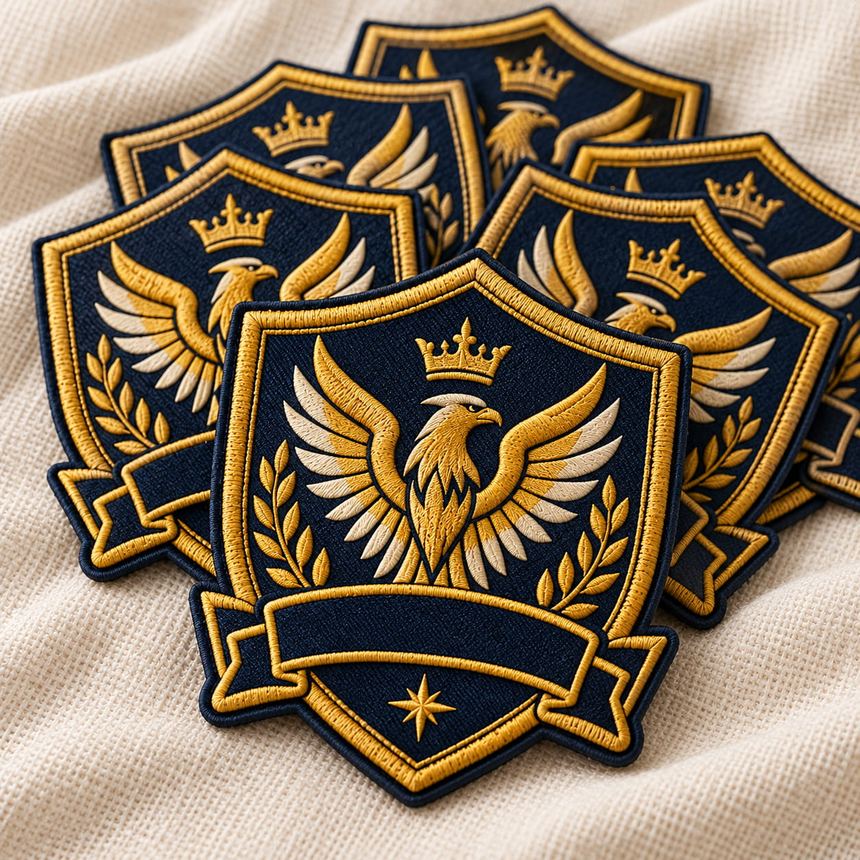
The price of a custom patch depends on its size, quantity, material and design. Even two patches of the same width can need different amounts of work. That is why a quote for your actual artwork matters more than a headline price.
This guide explains what you are really paying for, so you can compare quotes properly and spot the ones with fees buried in the small print.
The short answer
These are our published starting prices for a 3-inch embroidered patch, in US dollars, before shipping. They assume a straightforward design; your quote is the final price.
| Quantity | Starting price each |
|---|---|
| 25 pieces | $4.20 |
| 50 pieces | $3.20 |
| 100 pieces | $2.55 |
| 250 pieces | $1.85 |
| 500+ pieces | $1.40 |
Material and size change the comparison. At 100 pieces, our starting price is $5.20 each for a 4-inch chenille patch and $3.45 each for a 3-inch PVC patch. See the full pricing table for other sizes and materials.
Always compare the delivered total, including any setup, mould and shipping charges, when looking at quotes from different suppliers.
The four things that set your price
1. Quantity — by far the biggest lever
This is the one that surprises people. Going from 25 patches to 250 does not make your total ten times bigger; it roughly triples it.
The reason is that a large chunk of the work happens once, no matter how many patches you order. Your artwork has to be digitised into stitch instructions. The machine has to be threaded and calibrated. A sample gets run and checked. That setup cost is identical for 25 patches or 500 — it just gets divided across more units.
So the practical advice is simple: if you know you will need more within the year, order them together. A club buying 50 crests now and 50 in six months will pay noticeably more than one buying 100 today.
2. Size — it scales with area, not width
People assume a 4-inch patch costs a third more than a 3-inch one. It does not. Price tracks surface area, and area grows with the square of the width.
A 4-inch patch has roughly 78% more area than a 3-inch patch. That is 78% more thread, more stitching time, more backing material.
This makes size the easiest place to save money without hurting your design. Dropping from 4 inches to 3 often cuts close to a third off your unit price, and on a chest crest nobody will notice.
3. Technique — what the patch is made of
Each material has a different cost structure:
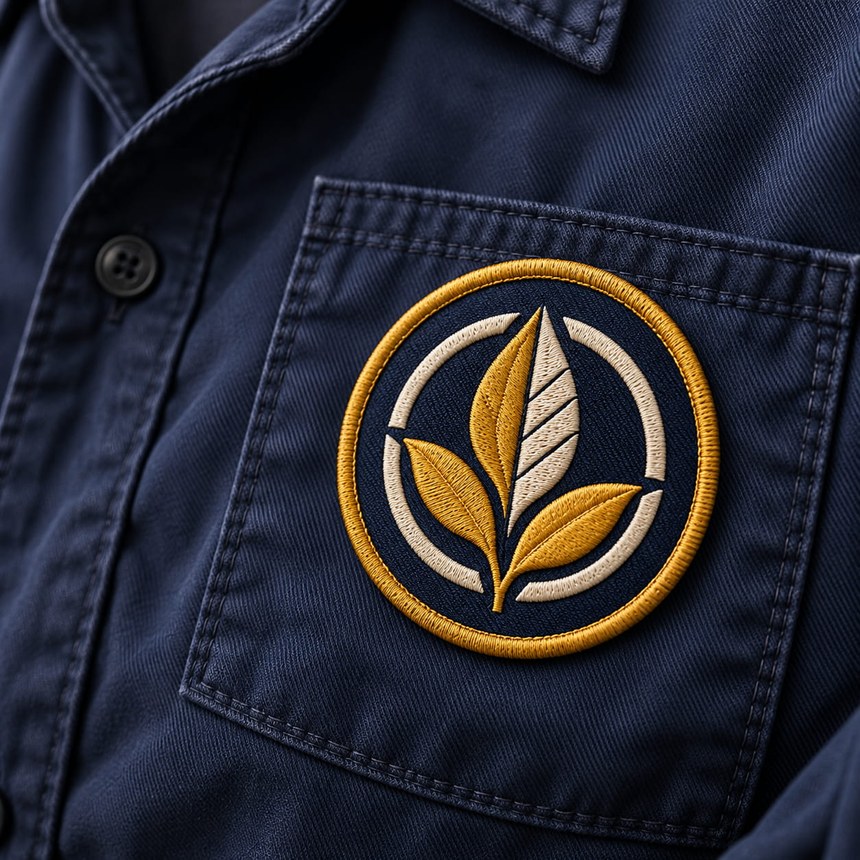
- Embroidered — the baseline. Thread stitched into twill. Most economical at volume.
- Sequin — similar to embroidery, slightly higher because sequin placement is fussier.
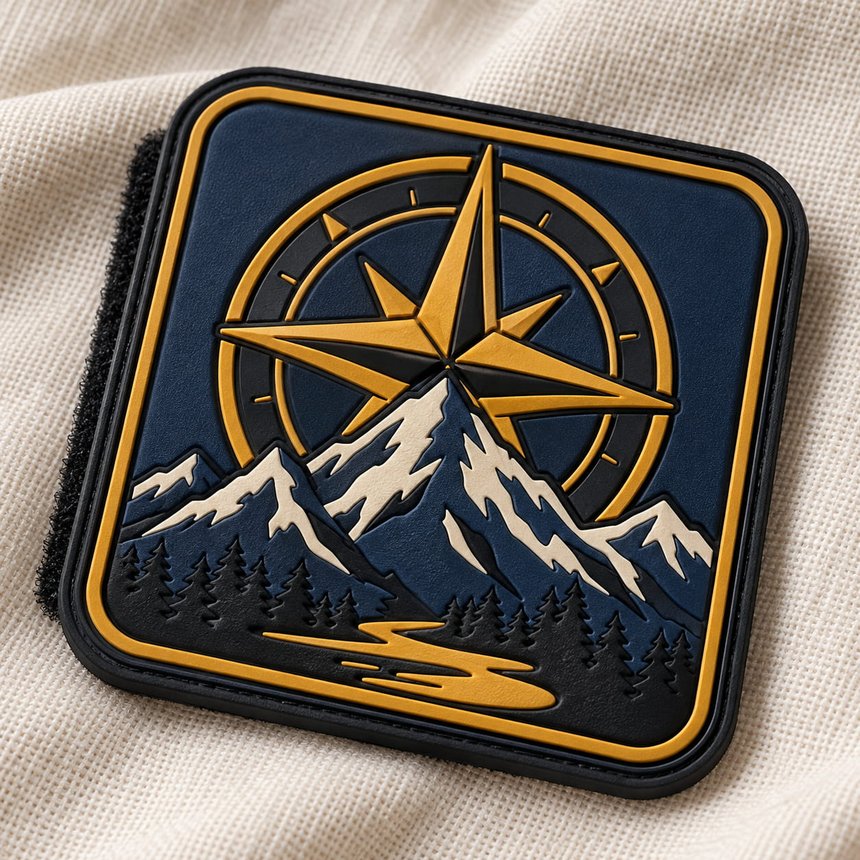
- PVC — moulded rubber. Needs a custom mould made for your design, a genuine one-off tooling cost. Excellent value at high volume, expensive for tiny runs.
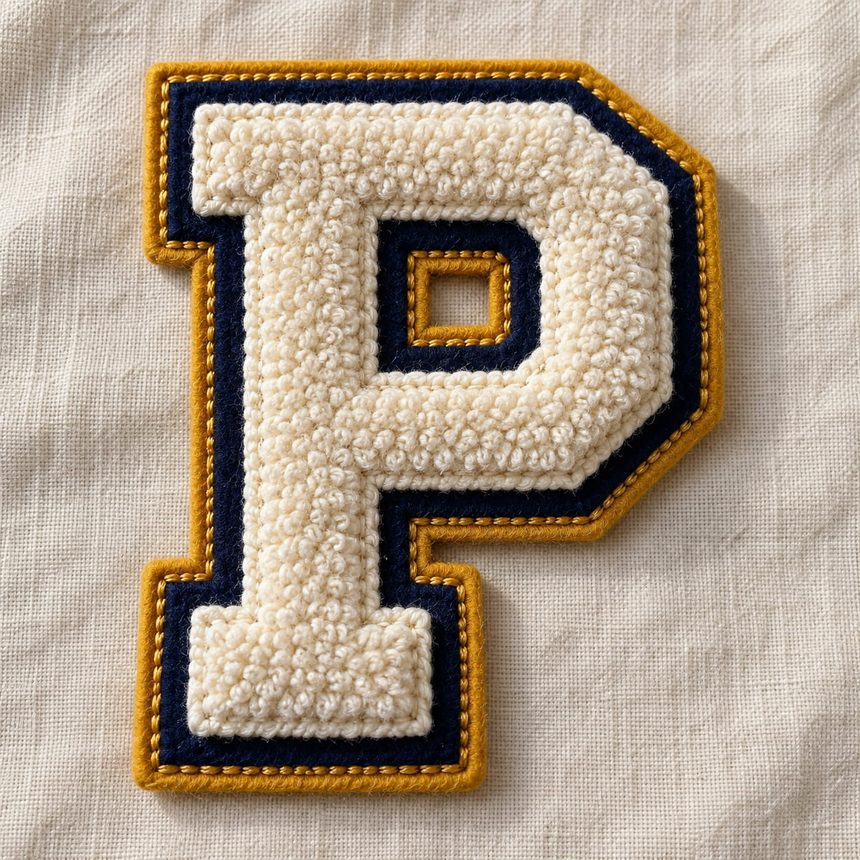
- Chenille — the priciest per unit at almost any quantity. Looped yarn work is labour-intensive and the patches are large by nature.
If your design would work in more than one material, ask for both prices. The difference can be substantial.
4. Complexity — detail, colours, and shape
More thread colours means more machine stops and more thread changes. Very fine detail means denser stitching and slower running. An irregular outline costs more to cut than a circle.
None of these are dramatic alone, but they stack. A simple two-colour circular crest and an intricate eight-colour badge with a custom die-cut outline are genuinely different jobs.
The fees to watch for
This is where quotes stop being comparable. Across the industry it is common to see:
- Digitising / setup fee — ask whether converting artwork into a stitch file is included
- PVC mould fee — ask whether custom tooling is included, especially on small runs
- Art fee — a charge for redrawing or cleaning up your logo
- Proof fee — occasionally charged per revision
- Minimum order surcharge — a flat uplift on small runs
For example, a quote of “$1.80 per patch” with a $30 setup fee and a $45 mould charge adds $1.50 per patch on an order of 50. The actual unit cost becomes $3.30 before shipping.
Always ask for the all-in total, not the per-unit price. It is the only number that lets you compare two suppliers honestly.
For what it is worth: we do not charge setup, digitising, art or proof fees, and we absorb the PVC mould on orders of 100 or more. Where a mould charge does apply on a small PVC run, it is stated on your quote up front rather than appearing later.
What “cheap” usually costs you
Very low quotes are normally achieved by cutting something real:
- Thinner thread coverage, so the twill backing shows through where it should not
- Lower stitch density, which looks fine new and goes fuzzy after a few washes
- A generic backing instead of the one you asked for
- No proof, so the first time you see your patch is when 200 of them arrive
- Long lead times, because your job is filler between bigger ones
The patch that costs $0.40 less and has to be reordered is not the cheaper patch.
How to bring your price down legitimately
Order in one batch. The single biggest saving available to you.
Go slightly smaller. Area scales quadratically, so a modest reduction has an outsized effect.
Simplify where it does not matter. Dropping from nine colours to five rarely weakens a design, and often sharpens it.
Skip the rush. Our published rush production charge is 25%. Planning ahead avoids that extra cost.
Ask for alternatives. A good supplier will tell you when a cheaper technique would serve you just as well. If yours never does, that is informative in itself.
A realistic budget example
A sports club needs 50 identical crests — a 3-inch embroidered shield, five colours, sew-on backing. Using our published starting price for a straightforward design:
| 50 × 3” embroidered @ $3.20 | $160 |
| Artwork setup | $0 |
| Digital proof | $0 |
| Shipping | Quoted by destination |
| Starting subtotal before shipping | $160 |
Two separate batches of 25 at the published starting price would total $210 before shipping. Ordering all 50 together saves $50 on the patch subtotal. The final quote may differ if the design is unusually detailed.
The question to ask every supplier
Before comparing quotes, ask each one:
“What is the total cost delivered, including every fee, for this exact design at this quantity and size?”
Any supplier who cannot answer that in a single number is one you will have surprises with later.
Want a real figure for your design? Request a free quote — send your artwork or describe the idea. We usually reply with a price within one business day. If you want to proceed, we prepare a free digital proof for your approval before production.
You can also see our standard pricing by size and quantity.